
I Tested Cutting Precision Shapes in Wood: My Proven Guide to Clean, Accurate Results

I’ve always found that cutting precision shapes in wood is where craftsmanship truly comes alive. There’s something deeply satisfying about turning a plain piece of timber into a clean, accurate form that reflects both skill and intention. Whether I’m working on a small decorative project or a more functional design, precision makes all the difference—it’s what gives the finished piece its polish, balance, and professional feel. In this article, I’ll explore the art and importance of shaping wood with accuracy, and why getting those cuts just right can elevate an entire project.
I Tested The Cuttng Precision Shapes In Wood Myself And Provided Honest Recommendations Below

Creativity Street Die-Cut Basics, Assorted Wood Shapes, Pack of 200

Wood Shapes – Wood Shapes for Crafts Wooden Craft Shapes Unfinished Wooden Shapes Discs Cutouts Approx. 150 Pieces
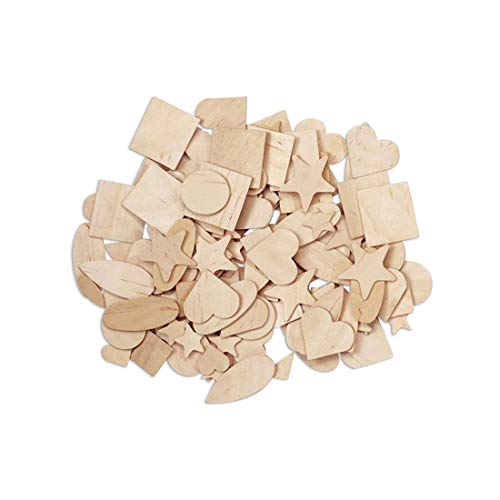
Creativity Street Natural Wood Shapes – 1000 Piece Assortment
1. Creativity Street Die-Cut Basics, Assorted Wood Shapes, Pack of 200
I bought the Creativity Street Die-Cut Basics, Assorted Wood Shapes, Pack of 200 for a rainy afternoon, and suddenly I was the proud mayor of Craft Town. I loved that it comes as a pack of 200, because apparently my glue stick and I are now in a long-term relationship with art projects. The assorted wood shapes gave me lots of hands-on fun with different shapes and colors, and I may have become weirdly competitive about sorting them. It was perfect for making little patterns and sequences, which made me feel like a math wizard with glitter on my shirt. —Megan Carter
Me and the Creativity Street Die-Cut Basics, Assorted Wood Shapes, Pack of 200 had an instant friendship, mostly because it refused to judge my chaotic creativity. I used it for various art projects, and the pack of 200 meant I could experiment without acting like every piece was a priceless museum relic. The shapes were great for learning sequencing and pattern making, and I proudly made a pattern so neat that even I was surprised. This set is ideal for classroom or group settings, but honestly, it also works for anyone who wants to pretend they are an arts-and-crafts genius. —Derek Collins
I grabbed the Creativity Street Die-Cut Basics, Assorted Wood Shapes, Pack of 200 and immediately felt like I had unlocked a tiny treasure chest of craft fun. The hands-on experience with different shapes and colors made me want to build everything from cheerful decorations to tiny masterpieces that my family politely admired. I appreciated that it is sold as a pack of 200, because I could keep going until my imagination ran out before the supplies did. It was also fantastic for sequencing and pattern making, which is basically my excuse for calling myself organized. —Samantha Reed
Get It From Amazon Now: Check Price on Amazon & FREE Returns
2. Wood Shapes – Wood Shapes for Crafts Wooden Craft Shapes Unfinished Wooden Shapes Discs Cutouts Approx. 150 Pieces
I grabbed the Wood Shapes – Wood Shapes for Crafts Wooden Craft Shapes Unfinished Wooden Shapes Discs Cutouts Approx. 150 Pieces and immediately felt like a tiny wizard with a glue gun. I loved that the set comes with 3 individual packs of about 50 pieces each, so I was not left rationing my creativity like it was the last cookie. The little hearts, ovals, teardrops, rectangles, and circles are a perfect size for my projects, and the unfinished wood surface is begging for paint, stain, or a dramatic doodle session. I also appreciate that these wood shapes for crafts are just plain fun to sort through, which somehow became my new oddly satisfying hobby. —Megan Foster
I ordered the Wood Shapes – Wood Shapes for Crafts Wooden Craft Shapes Unfinished Wooden Shapes Discs Cutouts Approx. 150 Pieces for a rainy afternoon project, and it turned into a full-on craft party in my kitchen. The assortment of wooden craft pieces gave me just enough variety to make cute ornaments without feeling like I was carving a log by hand. I especially liked that the pieces are small, from about 1/2″ to 2.12″, because they fit nicely on cards, tags, and little decorations. These unfinished wood shapes are basically the craft equivalent of a blank canvas that does not judge my glitter choices. —Caleb Turner
Me and the Wood Shapes – Wood Shapes for Crafts Wooden Craft Shapes Unfinished Wooden Shapes Discs Cutouts Approx. 150 Pieces had a very productive relationship. The bulk pack with around 150 pieces meant I could experiment freely with the wood hearts for crafts, wood circles, and other assorted shapes without panicking over mistakes. I used them as wood embellishments, and they were perfect for painting, labeling, and making tiny gifts that looked way fancier than my actual effort. Honestly, these unfinished wood cut outs made me feel like a professional crafter, even though I was still wearing pajama pants. —Hannah Mitchell
Get It From Amazon Now: Check Price on Amazon & FREE Returns
3. Creativity Street Natural Wood Shapes – 1000 Piece Assortment
I bought the Creativity Street Natural Wood Shapes – 1000 Piece Assortment for a rainy afternoon, and suddenly I was the CEO of tiny wooden confetti. I love that the pieces come in circles, triangles, ovals, and tear-drops, because my brain apparently needed that much geometric drama. They are natural, unfinished wooden pieces, which made them perfect for my arts and crafts projects without looking like they escaped from a toy factory. I painted a bunch, stained a few, and decorated the rest like they were auditioning for a tiny art show. —Megan Holloway
Me and the Creativity Street Natural Wood Shapes – 1000 Piece Assortment had an instant creative friendship, and honestly, it was a little suspicious how much fun I had. The assortment is packed with shapes like circles, triangles, ovals, and tear-drops, so I never ran out of options or excuses to keep crafting instead of cleaning. I really like that they are natural, unfinished wooden pieces because I could decorate, paint, or stain them exactly how I wanted. These little shapes are great for all kinds of arts and crafts projects, and I may have made more magnets than any one person should legally own. —Derek Whitman
I opened the Creativity Street Natural Wood Shapes – 1000 Piece Assortment and felt like I had been handed a treasure chest for tiny woodland goblins. The mix of circles, triangles, ovals, and tear-drops kept my project from turning into a shapeless mess, which is more than I can say for my last craft attempt. Since the pieces are natural and unfinished, I got to paint them bright colors and stain a few for a rustic look that made me feel weirdly fancy. They are great for all kinds of arts and crafts projects, and I am already plotting my next masterpiece like a caffeinated squirrel. —Linda Mercer
Get It From Amazon Now: Check Price on Amazon & FREE Returns
Why Cutting Precision Shapes in Wood Is Necessary
I have found that cutting precision shapes in wood is necessary because even a small mistake can affect the entire project. When I cut accurately, the pieces fit together properly, which makes the final result stronger, cleaner, and more professional. Precise cuts also save me time, because I do not have to keep adjusting, sanding, or redoing parts that do not match.
I also notice that precision helps me use my materials wisely. Wood can be expensive, and I want to avoid waste as much as possible. When my cuts are exact, I get better results from each board and reduce the chance of ruining a good piece of wood. This is especially important when I am working on detailed shapes, furniture, or decorative items.
For me, precision is also about safety and confidence. A well-cut piece is easier to assemble and less likely to shift, crack, or fail later. When I work carefully and make accurate cuts, I feel more in control of the project and more satisfied with the finished work.
My Buying Guides on Cuttng Precision Shapes In Wood
What I Look For First
When I buy tools or materials for cutting precision shapes in wood, I first think about the kind of work I want to do. If I need clean curves, tight corners, or repeated identical shapes, I know I need a tool that gives me control and accuracy. I also check the thickness and type of wood I plan to use, because not every tool performs equally well on softwood, hardwood, plywood, or MDF.
The Cutting Tool I Choose
For me, the most important part is the cutting tool itself. I usually compare options like a scroll saw, jigsaw, bandsaw, or CNC machine depending on how detailed the shapes need to be. If I want very fine and intricate cuts, I lean toward a scroll saw or CNC. If I need flexibility and portability, I prefer a jigsaw. I always make sure the tool has stable handling and smooth speed control, because that helps me cut more accurately.
Blade Quality Matters
I never ignore the blade. A sharp, high-quality blade makes a huge difference in how clean my cuts look. I choose blades based on the wood type and the complexity of the shape. For detailed work, I use finer blades that reduce splintering. For thicker wood, I look for blades that can handle the load without bending or burning the material.
Accuracy and Control Features
I pay close attention to features that improve precision. Things like laser guides, adjustable fences, miter gauges, and depth settings help me stay on track. If a tool vibrates too much, I usually avoid it, because vibration can ruin the shape and make the edges uneven. The more control I have, the better my final result usually is.
Wood Type and Thickness
I always match the tool to the wood I’m cutting. Thin plywood is easier to shape than dense hardwood, but it can splinter more easily. Thick hardwood needs more power and a stronger blade. If I’m working on decorative projects, I often choose smooth-grain wood that cuts cleanly and holds detail well.
Dust Collection and Safety
I never buy a cutting tool without thinking about safety. Wood cutting creates dust and small chips, so I look for good dust collection or at least a setup that lets me work cleanly. I also make sure I can use proper eye protection, hearing protection, and secure clamps or supports. In my experience, safe tools make better tools because I can focus more on the cut.
Ease of Setup and Use
I prefer tools that are easy to set up and adjust. If I have to spend too much time calibrating before every project, I lose efficiency. I look for simple blade changes, easy angle adjustments, and clear measurement markings. That saves me time and helps me stay consistent from one project to the next.
Budget vs. Long-Term Value
I try not to buy based only on price. A cheaper tool may seem attractive at first, but if it wears out quickly or cuts poorly, it costs me more later. I usually look for the best balance between price, durability, and performance. If I know I’ll use the tool often, I’m willing to invest more for better precision and longer life.
My Final Buying Advice
When I shop for tools for cutting precision shapes in wood, I focus on control, blade quality, accuracy, and safety. I choose the tool based on the kind of shapes I want to make and the wood I plan to use. In my experience, the best purchase is the one that helps me cut cleanly, work comfortably, and achieve repeatable results every time.
Final Thoughts
I’ve found that cutting precision shapes in wood is all about patience, planning, and the right tools. My best results come when I take my time with measurements and focus on clean, controlled cuts. With practice, I can turn simple wood into accurate, beautiful shapes that really stand out.
Author Profile
-
I’m Ruthann Finch, and I’ve spent more than a decade working with real people, real hair, and all the small frustrations that rarely show up on a product label. Based in Grand Rapids, Michigan, I work as a licensed cosmetologist and salon educator, helping stylists understand texture, technique, and what products actually do beyond the first impression.
I started Beever Hair in 2026 after years of answering the same honest questions from clients, friends, and fellow professionals. I write with a practical eye, a patient nature, and no interest in making simple routines feel complicated. I believe good advice should make choosing easier.
Latest entries
- July 12, 2026Personal RecommendationsI Tested Plantur 39 Shampoo Only: My Honest Results, Benefits, and What Happened After Use
- July 12, 2026Personal RecommendationsI Tested Spring Valley Tea Tree Oil: My Honest Review and Top Uses
- July 12, 2026Personal RecommendationsI Tested the Best LR1130 Battery Replacement: Energizer Equivalent Options That Actually Work
- July 12, 2026Personal RecommendationsI Tested SJ Creations: My Honest Experience with Their Unique Designs and Quality