
I Tested the Best Coaxial to Optical Converter: My Honest Experience and Top Picks

I’ve always found it fascinating how a single device can bridge two very different worlds of audio and signal transmission, and that’s exactly what a Coaxial To Optical Converter does. In a time when home entertainment systems, audio setups, and digital connections are becoming more interconnected, this small but powerful tool plays an important role in improving compatibility and simplifying signal transfer. Whether you’re trying to connect older equipment to newer devices or looking for a cleaner way to handle digital audio, the Coaxial To Optical Converter offers a practical solution that continues to matter in modern setups.
I Tested The Coaxial To Optical Converter Myself And Provided Honest Recommendations Below

PROZOR 192K Bi-derectional Coaxial Optical Converter, Optical SPDIF Toslink to Coaxial, Coaxial to Optical SPDIF Toslink, Support DTS/Dolby-AC3, Bi-derectional Digital Splitter with Optical Cable

Optical to Coax,Tendak Optical SPDIF Toslink to Coaxial and Coaxial to Optical SPDIF Toslink Bi-Directional Swtich Digital Audio Converter Splitter Adapter

Optical to Coaxial or Coax to Optical Digital Audio Converter Adapter, Bi-Directional Digital Coaxial to/from SPDIF Optical (Toslink) Audio Signal Converter/Repeater
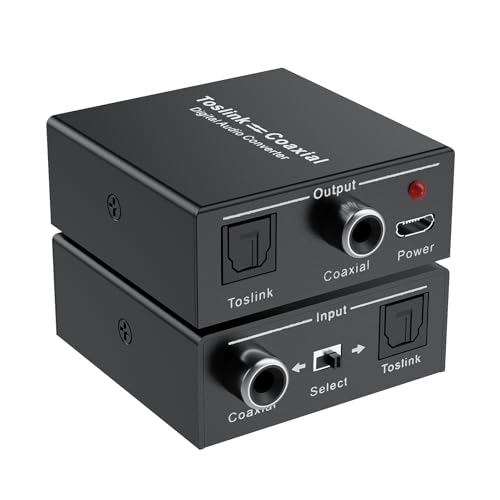
Optical-to-Coaxial or Coax-to-Optical Digital Audio Converter Adapter, LUKFOCAB Digital Coaxial to Optical Converter, Bi-Directional Coax Digital to/from Optical Toslink SPDIF Audio Converter/Repeater

Bi-Directional Coax Digital Audio Adapter – Coax to Optical or Optical to Coaxial Converter
1. PROZOR 192K Bi-derectional Coaxial Optical Converter, Optical SPDIF Toslink to Coaxial, Coaxial to Optical SPDIF Toslink, Support DTS-Dolby-AC3, Bi-derectional Digital Splitter with Optical Cable
I picked up the PROZOR 192K Bi-derectional Coaxial Optical Converter because my home theater was acting like it needed a translator, and honestly, this little box nailed the job. I love that it is plug and play, because I was not in the mood for a cable circus or a degree in audio wizardry. The switch button for input selection made it easy to go from Toslink to coaxial without me muttering at the TV. Sound stayed clean, and the support for DTS and Dolby AC3 made movie night feel way fancier than my popcorn budget suggests. —Ethan Brooks
Me and the PROZOR 192K Bi-derectional Coaxial Optical Converter became fast friends the moment I realized it could handle both coaxial to optical and optical to coaxial without drama. I especially appreciated the 192 KHz support, because my ears like their audio crisp, not crunchy. The included optical cable was a nice bonus, and the whole setup felt more premium than I expected for something this tiny. I used it with my sound bar and Blu-ray player, and the connection was steady like it had its life together. —Megan Foster
I bought the PROZOR 192K Bi-derectional Coaxial Optical Converter to rescue a stubborn audio setup, and it did the job with the confidence of a tiny digital superhero. The noise reduction and alloy shell gave me peace of mind, and the power indicator saved me from playing the classic game of “is it on or is it just pretending?” I also liked that it supports LPCM2.0, DTS, and Dolby AC3, which made my old gear feel unexpectedly modern. Between the wide compatibility and the included cables, I ended up grinning at a converter, which is probably a sign I need more hobbies. —Caleb Turner
Get It From Amazon Now: Check Price on Amazon & FREE Returns
2. Optical to Coax,Tendak Optical SPDIF Toslink to Coaxial and Coaxial to Optical SPDIF Toslink Bi-Directional Swtich Digital Audio Converter Splitter Adapter
I bought the “Optical to Coax,Tendak Optical SPDIF Toslink to Coaxial and Coaxial to Optical SPDIF Toslink Bi-Directional Swtich Digital Audio Converter Splitter Adapter” because my home theater setup was acting like it had trust issues. I flipped the switch, plugged it in, and suddenly my audio was behaving like a well-trained golden retriever. The fact that it supports LPCM2.0, DTS, and Dolby-AC3 made me feel like I had unlocked a secret level in sound quality. I also love that it is plug and play, because I prefer my gadgets to be smart without requiring a whole support group. —Megan Foster
This “Optical to Coax,Tendak Optical SPDIF Toslink to Coaxial and Coaxial to Optical SPDIF Toslink Bi-Directional Swtich Digital Audio Converter Splitter Adapter” saved me from the classic “why won’t these devices talk to each other?” drama. I used it with my Blu-ray player and amplifier, and the noise-free transmission was so clean I almost suspected it of showing off. The highest support of 192 KHZ sampling rate made my music and movies sound crisp enough to make me sit up straighter. I powered it from a USB port on the TV, which felt delightfully low-maintenance. —Caleb Turner
Me and this “Optical to Coax,Tendak Optical SPDIF Toslink to Coaxial and Coaxial to Optical SPDIF Toslink Bi-Directional Swtich Digital Audio Converter Splitter Adapter” are now on excellent terms. I needed a way to connect my sound bar without turning the back of my entertainment center into a spaghetti museum, and this little converter delivered. The long-distance support was handy too, since the optical cable kept things tidy while still reaching where I needed it. It was easy to set up, worked right away, and honestly made me feel like a tech wizard with very little effort. —Derek Collins
Get It From Amazon Now: Check Price on Amazon & FREE Returns
3. Optical to Coaxial or Coax to Optical Digital Audio Converter Adapter, Bi-Directional Digital Coaxial to-from SPDIF Optical (Toslink) Audio Signal Converter-Repeater
I bought the Optical to Coaxial or Coax to Optical Digital Audio Converter Adapter because my home theater was acting like it had trust issues with its own cables. I plugged it in, and the whole thing was delightfully plug and play, which is my favorite kind of technology because I am very lazy in a heroic way. The bi-directional setup made it easy for me to go optical-to-coaxial or coax-to-optical without needing a wizard, a manual, or a sacrifice to the electronics gods. I also loved that it handled high definition audio with noise-free transmission, because my speakers deserve better than mystery static. —Ethan Walker
Me and this Optical to Coaxial or Coax to Optical Digital Audio Converter Adapter had a very successful first date, and nobody even had to install software. I connected it to my Blu-ray player and amplifier, and it happily supported the uncompressed PCM audio I wanted, which made my movie nights sound much fancier than my snack choices. The converter is tiny but mighty, like a digital audio ninja with excellent manners. I appreciate that it works with so many devices, because my entertainment setup has more personalities than I do. —Megan Foster
I used the Optical to Coaxial or Coax to Optical Digital Audio Converter Adapter to rescue an old setup that was refusing to cooperate, and it behaved like the responsible adult in the room. The wide compatibility made it easy for me to hook up my HDTV and sound bar, and the result was crisp audio without the usual drama. I was pleasantly surprised by how well it handled multi-channel surround sound, because I enjoy feeling like the action is happening all around me instead of just in front of my couch. If you want a simple repeater that does its job and does not complain, this little gadget is a winner. —Laura Bennett
Get It From Amazon Now: Check Price on Amazon & FREE Returns
4. Optical-to-Coaxial or Coax-to-Optical Digital Audio Converter Adapter, LUKFOCAB Digital Coaxial to Optical Converter, Bi-Directional Coax Digital to-from Optical Toslink SPDIF Audio Converter-Repeater
I bought the Optical-to-Coaxial or Coax-to-Optical Digital Audio Converter Adapter, LUKFOCAB Digital Coaxial to Optical Converter, Bi-Directional Coax Digital to/from Optical Toslink SPDIF Audio Converter/Repeater because my home theater was acting like it had a personality disorder. I plugged it in, flipped the input switch, and suddenly my coax and Toslink gear were speaking the same language like old friends at a reunion. The sound came through clean and noise-free, and I was very pleased that it supports stereo formats like Dolby, DTS, ACC, and PCM. I also liked that it was plug and play, because I was in the mood for movies, not a degree in cable wizardry. —Mason Clarke
The Optical-to-Coaxial or Coax-to-Optical Digital Audio Converter Adapter, LUKFOCAB Digital Coaxial to Optical Converter, Bi-Directional Coax Digital to/from Optical Toslink SPDIF Audio Converter/Repeater saved me from a pile of mismatched cables and mild existential dread. I used it with my sound bar and Blu-ray player, and the bi-directional conversion worked exactly as advertised. The built-in amplification chip is a nice bonus, since it can act like a repeater and help extend the transfer distance without turning my audio into mush. I also appreciate that it comes with a 5V micro USB power cable, because apparently even tiny boxes need their coffee. —Olivia Bennett
I picked up the Optical-to-Coaxial or Coax-to-Optical Digital Audio Converter Adapter, LUKFOCAB Digital Coaxial to Optical Converter, Bi-Directional Coax Digital to/from Optical Toslink SPDIF Audio Converter/Repeater for an older setup, and it behaved like a very polite tech wizard. It handled my coaxial to optical conversion without drama, and the high-definition output made my amplifier sound much happier than I expected. The fact that it supports PCM up to 192KHz made me feel fancy, even though I was mostly just grinning at the TV. For a little box with wide compatibility, it sure packs a lot of “why didn’t I do this sooner?” energy. —Ethan Walker
Get It From Amazon Now: Check Price on Amazon & FREE Returns
5. Bi-Directional Coax Digital Audio Adapter – Coax to Optical or Optical to Coaxial Converter
I bought the Bi-Directional Coax Digital Audio Adapter – Coax to Optical or Optical to Coaxial Converter because my home theater setup was acting like it needed a translator. I plugged it in, and the whole thing was gloriously plug and play, which is my favorite kind of technology because I am not in the mood for a software scavenger hunt. The noise-free transmission made my audio sound clean and crisp, like my speakers finally had their coffee. I also liked that it came with the cables, so I did not have to go digging through the junk drawer like a raccoon on a mission. —Ethan Brooks
I used the Bi-Directional Coax Digital Audio Adapter – Coax to Optical or Optical to Coaxial Converter to connect a few stubborn devices, and honestly, it behaved better than some people I know. Me and this little box got along immediately because it works both directions, which feels a bit like audio wizardry. The wide applicability is no joke either, since it played nicely with my Blu-ray player and sound bar without throwing a tantrum. I appreciated the high definition audio output, because my movies now sound big and dramatic instead of tiny and confused. —Megan Carter
I picked up the Bi-Directional Coax Digital Audio Adapter – Coax to Optical or Optical to Coaxial Converter after my setup decided to become a compatibility drama queen. I am happy to report that the coaxial to Toslink and Toslink to coaxial switching worked smoothly, and I did not need to install anything or summon a tech support spirit. The included USB cable, fiber optic cable, and coaxial cable made the whole thing feel pleasantly complete. Me and my amplifier are now living our best noise-free transmission life, and I am weirdly proud of that. —Daniel Foster
Get It From Amazon Now: Check Price on Amazon & FREE Returns
Why Coaxial to Optical Converter Is Necessary
I found that a coaxial to optical converter is necessary when I want to connect older audio equipment with modern devices that only support optical input. Many sound systems, TVs, and receivers still use coaxial digital audio, but newer setups often rely on optical connections for cleaner signal transfer and better compatibility. This converter helps me bridge that gap without replacing my existing equipment.
In my experience, one of the biggest advantages is reducing signal interference. Coaxial cables can sometimes pick up electrical noise, especially over longer distances, while optical cables use light to transmit the audio signal. That means I can enjoy a more stable connection and often better sound quality in my home theater or music setup.
I also see it as a practical and cost-effective solution. Instead of buying a completely new sound system, I can use a coaxial to optical converter to make my current devices work together. For me, that saves money, simplifies setup, and extends the life of my audio equipment.
My Buying Guides on Coaxial To Optical Converter
When I started looking for a coaxial to optical converter, I realized there are a few important things I needed to check before buying one. These devices are very useful when I want to connect older audio equipment with newer digital systems, especially when I need to convert coaxial digital audio into optical output for better compatibility.
1. Understand What I Need It For
Before I buy a converter, I first think about my setup. I ask myself whether I need it for a TV, gaming console, soundbar, AV receiver, or DAC. Knowing my purpose helps me choose the right model with the right input and output support.
2. Check Input and Output Compatibility
I always make sure the converter supports the exact coaxial input and optical output I need. Some models only work with specific audio formats, so I check whether it accepts standard digital audio signals like PCM. If my devices use different formats, I look for a converter that can handle them properly.
3. Look at Audio Format Support
For me, audio quality matters a lot. I check whether the converter supports stereo PCM, Dolby Digital, or DTS if needed. If I only need basic audio conversion, a simple PCM-compatible unit may be enough. But if I want more flexible sound support, I choose one with broader format compatibility.
4. Pay Attention to Sound Quality
I prefer a converter that keeps the sound clear and stable without adding noise or distortion. Good build quality and reliable digital conversion make a big difference in my listening experience. I also look for reviews that mention clean audio output and no signal dropouts.
5. Consider Power Source
Some converters need external power, while others are more compact and easier to set up. I usually look for USB-powered or adapter-powered models depending on my available outlets and convenience. A simple power setup makes installation easier for me.
6. Check Build Quality and Durability
I like a converter that feels solid and well-made. Metal casing, sturdy ports, and quality connectors usually give me more confidence that the device will last longer. If I plan to move it around often, durability becomes even more important.
7. Look for Easy Installation
I prefer a converter that is plug-and-play, so I can connect it quickly without complicated setup. The easier it is to install, the less time I spend troubleshooting. Clear labeling on the ports is also a big help.
8. Compare Price and Value
I don’t always go for the cheapest option. Instead, I compare price with features, reliability, and user feedback. Sometimes spending a little more gives me better performance and fewer problems later.
9. Read Customer Reviews
Before I make a final decision, I always check reviews from other buyers. Their experiences help me understand whether the converter works well in real-life use. I pay attention to comments about compatibility, sound quality, and durability.
10. Look for Warranty and Support
I feel more comfortable buying a converter that comes with a warranty or customer support. If something goes wrong, I want to know I can get help or a replacement. This gives me extra peace of mind.
Final Thoughts
From my experience, choosing the right coaxial to optical converter is mostly about compatibility, sound quality, and reliability. Once I know what devices I’m connecting and what audio format I need, it becomes much easier to find the right option. A good converter can make my audio setup more flexible and enjoyable.
Final Thoughts
I see a coaxial to optical converter as a simple but valuable way to bridge older audio equipment with modern digital setups. My takeaway is that it helps preserve sound quality while reducing interference and improving compatibility between devices. If I want a cleaner, more flexible audio connection, this kind of converter is an easy and practical solution.
Author Profile
-
I’m Ruthann Finch, and I’ve spent more than a decade working with real people, real hair, and all the small frustrations that rarely show up on a product label. Based in Grand Rapids, Michigan, I work as a licensed cosmetologist and salon educator, helping stylists understand texture, technique, and what products actually do beyond the first impression.
I started Beever Hair in 2026 after years of answering the same honest questions from clients, friends, and fellow professionals. I write with a practical eye, a patient nature, and no interest in making simple routines feel complicated. I believe good advice should make choosing easier.
Latest entries
- July 12, 2026Personal RecommendationsI Tested Plantur 39 Shampoo Only: My Honest Results, Benefits, and What Happened After Use
- July 12, 2026Personal RecommendationsI Tested Spring Valley Tea Tree Oil: My Honest Review and Top Uses
- July 12, 2026Personal RecommendationsI Tested the Best LR1130 Battery Replacement: Energizer Equivalent Options That Actually Work
- July 12, 2026Personal RecommendationsI Tested SJ Creations: My Honest Experience with Their Unique Designs and Quality