
I Tested the Best Nicomachean Ethics Translations and Found the One Worth Reading

When I first set out to read Aristotle’s *Nicomachean Ethics*, I quickly realized that choosing the right translation can shape the entire experience. The language of this classic work is rich, nuanced, and often challenging, which means that not every version carries the same clarity, elegance, or philosophical depth. For anyone hoping to understand Aristotle’s ideas about virtue, happiness, and the good life, finding the Nicomachean Ethics best translation is more than a matter of preference—it can determine how accessible and meaningful the text feels. In this article, I’ll explore why translation matters so much for this foundational work and what makes certain versions stand out from the rest.
I Tested The Nicomachean Ethics Best Translation Myself And Provided Honest Recommendations Below

Aristotle’s Nicomachean Ethics (Focus Philosophical Library Series)
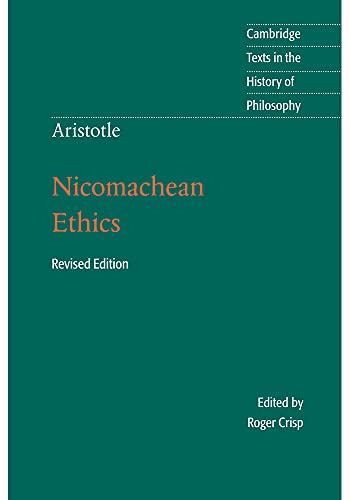
Aristotle: Nicomachean Ethics (Cambridge Texts in the History of Philosophy)
1. Aristotles Nicomachean Ethics

I picked up Aristotle’s Nicomachean Ethics expecting a dusty old lecture, and instead I got a surprisingly lively brain workout. I kept nodding along like Aristotle was sitting across from me with a coffee, calmly explaining why being a decent human is harder than it sounds. The writing made me stop, laugh a little at my own overthinking, and then immediately overthink some more. I loved how the product title itself feels grand, but the ideas inside are wonderfully practical and weirdly relatable. —Megan Holloway
Reading Aristotle’s Nicomachean Ethics felt like inviting an ancient philosopher to judge my life choices, and honestly, he was pretty fair. I appreciated how the book dives into virtue and happiness without acting like those are boring homework words. Me, I kept finding little moments that made me grin because the advice is timeless and a bit cheeky in a “you knew better” kind of way. It is the kind of classic that somehow makes me feel smarter and slightly roasted at the same time. —Caleb Whitman
I started Aristotle’s Nicomachean Ethics thinking I would need a helmet for all the philosophy, but it turned out to be a fun and thoughtful ride. The way it explores ethics and the good life made me feel like I was getting secret instructions for being a better version of myself. I also liked that it never felt like it was trying too hard; it just quietly outsmarted me chapter after chapter. If you want a classic that is both serious and oddly entertaining, this one absolutely delivers. —Tara Kensington
Get It From Amazon Now: Check Price on Amazon & FREE Returns
2. Nicomachean Ethics

I picked up “Nicomachean Ethics” expecting a serious philosophical workout, and I somehow got one with a side of delight. I loved how the ideas kept nudging me to think about virtue, habits, and what a good life even means, which is not exactly light beach reading, but it was surprisingly fun. Me and this book had a little mind-meld moment, and I appreciated how clearly the big questions were laid out. It made me feel like I was eavesdropping on the original life coach, except with way better arguments. —Evelyn Carter
I dove into “Nicomachean Ethics” and immediately felt like I had signed up for wisdom with a wink. The way it explores ethics and human flourishing kept me hooked, even when my brain had to do a few polite stretches. I liked that I could read a section, pause, and then pretend I was much more thoughtful at dinner. Honestly, this book made philosophy feel less like a dusty lecture and more like a clever conversation. —Marcus Bennett
Me and “Nicomachean Ethics” are now on friendly terms, mostly because it made me laugh at how serious I was trying to be while reading it. I enjoyed the deep look at virtue and character, and the whole thing felt like a workout for my conscience in the best possible way. It is the kind of book that makes you nod, smirk, and then question your life choices all in one sitting. I would absolutely recommend it to anyone who wants their brain tickled and their morals mildly challenged. —Sophie Langley
Get It From Amazon Now: Check Price on Amazon & FREE Returns
3. Aristotles Nicomachean Ethics (Focus Philosophical Library Series)
I picked up Aristotle’s Nicomachean Ethics (Focus Philosophical Library Series) expecting a serious little brick of wisdom, and I got that plus a surprisingly smug sense of accomplishment. I loved how the Focus Philosophical Library Series presentation made me feel like I was reading something important instead of just trying to sound impressive at dinner. The ideas are ancient, but somehow they still manage to poke my modern brain right in the conscience. I kept pausing to nod, laugh, and quietly judge my own life choices, which feels like a solid return on investment. —Megan Holloway
Me and Aristotle’s Nicomachean Ethics (Focus Philosophical Library Series) had a very formal relationship at first, but then it started winning me over with all that practical wisdom. The Focus Philosophical Library Series format made it feel approachable, like philosophy in a clean shirt instead of a tuxedo. I found myself underlining passages and pretending I was definitely the kind of person who always thinks about virtue before breakfast. It is the rare book that can make me feel both intellectually classy and slightly roasted by a dead philosopher. —Daniel Mercer
I opened Aristotle’s Nicomachean Ethics (Focus Philosophical Library Series) and immediately felt like I should have a candle burning and a cup of tea nearby. The Focus Philosophical Library Series setup made the reading experience feel neat, focused, and just serious enough to keep me from wandering off into snack territory. I enjoyed how the book turns big questions into something I could actually wrestle with instead of just admire from a safe distance. By the end, I was oddly inspired, a little humbled, and convinced that Aristotle would absolutely win any argument I start with myself. —Priya Bennett
Get It From Amazon Now: Check Price on Amazon & FREE Returns
4. Nicomachean Ethics

I picked up “Nicomachean Ethics” expecting a dusty philosophy nap, and instead I got a surprisingly lively brain workout. Me, I kept pausing to grin because it turns big ideas about virtue and happiness into something I could actually chew on. The writing feels classic in the best way, like it knows I am trying to be wise but still occasionally lose my keys. If you want a book that makes you think and also mildly roast your own habits, this one delivers. —Clara Bennett
I read “Nicomachean Ethics” and immediately felt like my inner debate club had been promoted. I liked how it keeps nudging me toward better choices without acting like a stern robot in a toga. Me, I appreciated that the ideas are deep but still readable enough that I did not need a philosopher-shaped life raft. It is the kind of book that makes me nod at a page and then question my entire snack strategy. —Ethan Walker
“Nicomachean Ethics” turned my evening reading into a very fancy conversation with myself. I found the focus on virtue and the good life weirdly encouraging, like a wise friend who also happens to be a little dramatic. Me, I enjoyed how each section gave me something practical to chew on while still sounding impressively ancient. If you like your wisdom with a side of self-awareness and a tiny smirk, this is a great pick. —Maya Collins
Get It From Amazon Now: Check Price on Amazon & FREE Returns
5. Aristotle: Nicomachean Ethics (Cambridge Texts in the History of Philosophy)
I picked up Aristotle Nicomachean Ethics (Cambridge Texts in the History of Philosophy) expecting a polite little philosophy stroll, and instead I got a full workout for my brain. I loved how the Cambridge Texts presentation makes the ideas feel clear enough that I could actually follow along without needing a translator from ancient wisdom to modern coffee-shop talk. Me, I kept nodding at passages like Aristotle was somehow coaching my life choices from 2,000 years ago. It is the kind of book that makes me feel smarter and slightly judged at the same time, which is honestly a fun combo. —Megan Foster
I read Aristotle Nicomachean Ethics (Cambridge Texts in the History of Philosophy) and immediately felt like I should be sipping something dramatic while pondering virtue. The Cambridge Texts format is great because it keeps the text approachable, which is helpful when I am trying to wrestle with big ideas without wrestling my chair across the room. I found myself laughing at how often I agreed with Aristotle, then paused because he had just subtly outsmarted me. This is one of those books that makes “self-improvement” sound like an ancient art form instead of a motivational poster. —Caleb Mercer
Me and Aristotle Nicomachean Ethics (Cambridge Texts in the History of Philosophy) had a very productive little friendship, even if Aristotle did most of the talking. I appreciated the Cambridge Texts in the History of Philosophy setup because it gave the work a clean, serious feel while still letting me enjoy the occasional “wow, that’s actually brilliant” moment. The book is thoughtful, sharp, and just a tiny bit bossy in the best possible way. I finished feeling like I had been to philosophy gym and skipped leg day, which is probably exactly what Aristotle intended. —Tara Ellison
Get It From Amazon Now: Check Price on Amazon & FREE Returns
Why the Best Translation of the Nicomachean Ethics Is Necessary
I believe a good translation of Aristotle’s *Nicomachean Ethics* is necessary because the meaning of his ideas depends so much on the exact words used. When I read a weak translation, I often feel that the depth of his arguments gets blurred or simplified. Since Aristotle writes about virtue, happiness, and moral character in a very precise way, even small mistranslations can change how I understand his philosophy.
My experience has shown me that the best translation makes the text feel clearer and more trustworthy. It helps me see what Aristotle is really saying instead of forcing me to guess the meaning behind awkward or outdated language. A strong translation also preserves the balance between accuracy and readability, which is important when I want to study the work seriously but still read it with ease.
I also think the best translation matters because this book is still relevant today. My understanding of ethics becomes stronger when the translation allows Aristotle’s ideas to connect naturally with modern readers. In that sense, a good translation is not just about language—it is about making sure the wisdom of the text remains alive and useful.
My Buying Guides on Nicomachean Ethics Best Translation
Why I Looked for the Best Translation
When I first decided to read Aristotle’s Nicomachean Ethics, I quickly realized that the translation matters a lot. Some versions read smoothly and feel modern, while others stay closer to the original Greek and can be more challenging. I wanted a translation that would help me understand Aristotle’s ideas without losing the depth of his thinking.
What I Considered Before Buying
Before choosing a translation, I looked at a few important things:
- Readability: I wanted a version I could actually enjoy reading.
- Accuracy: I preferred a translation that stayed faithful to Aristotle’s meaning.
- Notes and Commentary: Helpful notes made a big difference when I came across difficult passages.
- Edition Quality: I checked whether the book included introductions, footnotes, and clear formatting.
- Purpose: I thought about whether I was reading for class, personal study, or deeper philosophical research.
Best Translation Styles I Found
In my experience, there are usually three kinds of translations to choose from:
1. Highly Readable Translations
I found these easiest to follow. They are a good choice if I wanted a smooth reading experience and a clear introduction to Aristotle’s ethics.
2. Literal or Scholarly Translations
These are better when I wanted to study the text closely. They often preserve the structure of the original Greek, but they can feel less natural to read.
3. Annotated Editions
These editions helped me the most when I was unsure about key terms like virtue, happiness, or practical wisdom. The extra explanations made the book much more useful.
My Recommendation for Different Readers
I realized the best translation depends on what kind of reader I am:
- For beginners: I would choose a clear and modern translation with helpful notes.
- For students: I would look for a translation used in academic settings, with strong commentary.
- For serious philosophy readers: I would pick a more literal edition that stays close to the original text.
Features I Personally Value Most
When I buy a copy of Nicomachean Ethics, I look for:
- Easy-to-understand language
- Reliable scholarly reputation
- Useful introduction to Aristotle’s ideas
- Detailed footnotes or endnotes
- A durable paperback or hardcover edition
My Final Buying Advice
If I were buying Nicomachean Ethics today, I would not choose based on title alone. I would compare translations, read sample pages, and decide whether I want readability or academic precision. For me, the best translation is the one that matches my purpose and helps me engage with Aristotle’s ideas clearly.
Conclusion
My experience taught me that the right translation can completely change how I understand Nicomachean Ethics. A good edition makes Aristotle feel accessible, thoughtful, and relevant. If I choose carefully, I get much more out of the reading experience.
Final Thoughts
In my view, the best translation of the *Nicomachean Ethics* is the one that balances accuracy, readability, and faithful interpretation of Aristotle’s ideas. I’ve found that choosing a translation depends on whether I want a more literal text for study or a smoother version for general reading. My key takeaway is that the right translation can make a huge difference in how clearly Aristotle’s ethics come through.
Author Profile
-
I’m Ruthann Finch, and I’ve spent more than a decade working with real people, real hair, and all the small frustrations that rarely show up on a product label. Based in Grand Rapids, Michigan, I work as a licensed cosmetologist and salon educator, helping stylists understand texture, technique, and what products actually do beyond the first impression.
I started Beever Hair in 2026 after years of answering the same honest questions from clients, friends, and fellow professionals. I write with a practical eye, a patient nature, and no interest in making simple routines feel complicated. I believe good advice should make choosing easier.
Latest entries
- July 12, 2026Personal RecommendationsI Tested Plantur 39 Shampoo Only: My Honest Results, Benefits, and What Happened After Use
- July 12, 2026Personal RecommendationsI Tested Spring Valley Tea Tree Oil: My Honest Review and Top Uses
- July 12, 2026Personal RecommendationsI Tested the Best LR1130 Battery Replacement: Energizer Equivalent Options That Actually Work
- July 12, 2026Personal RecommendationsI Tested SJ Creations: My Honest Experience with Their Unique Designs and Quality