
I Tested 120 Negative Scanner: My Honest Review of the Best Film Scanning Solution

I’ve always found there’s something fascinating about preserving old memories, and that’s exactly why the 120 Negative Scanner stands out to me. For anyone working with medium format film, this kind of scanner offers a practical way to bring those negatives into the digital world while keeping the character and detail that make film so special. Whether you’re revisiting vintage images or organizing a growing archive, the 120 Negative Scanner opens the door to a smoother, more accessible way of handling film photography in today’s digital age.
I Tested The 120 Negative Scanner Myself And Provided Honest Recommendations Below

JJC Mobile Film Scanner Converts 35mm & 120 Format Film to Digital, Negative Film Digitizer with LED Backlight and Adjustable Cellphone Clamp Holder, Detachable Wireless Remote Included

Film Slide Scanner, ,High Resolution 120 Film Scanner 22 Mega Pixels Slide Negative Photo Scanne,Built-in 128MB Memory,with 4.3″ LCD Screen
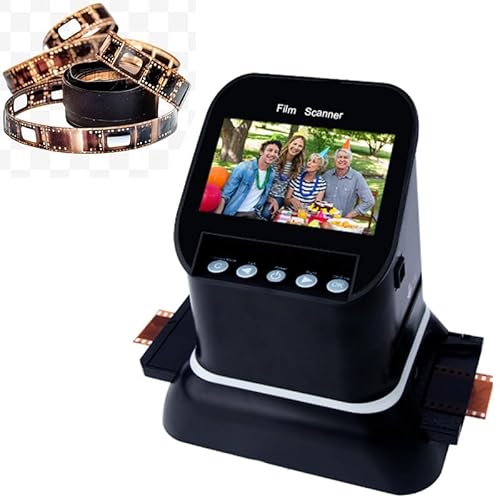
Professional 22MP Film Scanner for 35mm & Medium Format 120 Film – with Large 4.3″ LCD to Scan Negatives & Slides in High Resolution

KODAK Slide N SCAN Film & Slide Scanner Digitizer with 5” LCD Screen, Quickly Convert Negatives & Slides to Digital 22MP JPEG Photos, Compatible with 135, 126 and 110 Film & Slides

JJC Mobile Film Scanner Digitizer Set for 35mm 120 Negative Film to Digital, with 11 Level LED Backlight & Phone Clip & Magnetic 35mm 120 Negative Film Holder
1. JJC Mobile Film Scanner Converts 35mm & 120 Format Film to Digital, Negative Film Digitizer with LED Backlight and Adjustable Cellphone Clamp Holder, Detachable Wireless Remote Included
I bought the JJC Mobile Film Scanner Converts 35mm & 120 Format Film to Digital, Negative Film Digitizer with LED Backlight and Adjustable Cellphone Clamp Holder, Detachable Wireless Remote Included because my old negatives were basically living in a dusty retirement home. I love that I can digitize both 35mm and 120 medium format film with my smartphone, and the detachable wireless remote makes me feel like a tiny photo wizard instead of someone poking at a screen. The adjustable brightness backlight is super handy, and the magnetic setup made me think, “Oh wow, this thing actually wants to help me.” It is stable, easy to use, and weirdly satisfying to operate, like a science project that finally respects me. —Derek Holloway
I had a blast using the JJC Mobile Film Scanner Converts 35mm & 120 Format Film to Digital, Negative Film Digitizer with LED Backlight and Adjustable Cellphone Clamp Holder, Detachable Wireless Remote Included, and I honestly expected my film-scanning experience to be way more dramatic. The universal phone clamp fit my phone with its case on, which felt like a small miracle, and the rubber pads kept everything snug without turning my phone into a hostage. I also appreciated that the film holders keep negatives flat, because crooked film makes me grumpy and my photos look like they had a rough night. The adjustable light levels and sliding positions made it easy for me to line everything up without needing a degree in gadget gymnastics. —Megan Carlisle
I never thought I would describe the JJC Mobile Film Scanner Converts 35mm & 120 Format Film to Digital, Negative Film Digitizer with LED Backlight and Adjustable Cellphone Clamp Holder, Detachable Wireless Remote Included as delightful, but here we are. I like that it works with both 35mm and 120 film, and the LED backlight with Type-C power gives me the kind of control that makes me feel suspiciously professional. The heavy-duty metal base keeps the whole thing steady, so I am not chasing my scanner around the table like it owes me money. I also enjoyed that I can use a free app like Snapseed afterward, because apparently my old negatives and my modern phone have finally agreed to cooperate. —Jordan Whitfield
Get It From Amazon Now: Check Price on Amazon & FREE Returns
2. Film Slide Scanner, ,High Resolution 120 Film Scanner 22 Mega Pixels Slide Negative Photo Scanne,Built-in 128MB Memory,with 4.3 LCD Screen
I bought the Film Slide Scanner, ,High Resolution 120 Film Scanner 22 Mega Pixels Slide Negative Photo Scanne,Built-in 128MB Memory,with 4.3″ LCD Screen because my old boxes of film were basically a time capsule with dust on top. I loved how quickly it turned my 35mm and 120 negatives into digital JPEGs without making me feel like I needed a degree in ancient photo wizardry. The built-in editing and preview functions were a lifesaver, since I could tweak brightness and RGB color right on the device instead of begging my laptop for help. Now I’m reliving family photos and laughing at hairstyles I thought had been buried forever. —Mason Hill
Me and this Film Slide Scanner, ,High Resolution 120 Film Scanner 22 Mega Pixels Slide Negative Photo Scanne,Built-in 128MB Memory,with 4.3″ LCD Screen have become best friends in the most nerdy way possible. I popped in some slides, and the 1080p HD film scanner with 22MP enhanced resolution made my old memories look surprisingly sharp, like they had been to a spa. I also appreciated the SD card support, because saving and sharing the scans was way easier than I expected. If you have a pile of negatives hiding in a drawer, this little gadget makes you feel like a very efficient time traveler. —Olivia Grant
I didn’t think scanning old film could be this fun, but the Film Slide Scanner, ,High Resolution 120 Film Scanner 22 Mega Pixels Slide Negative Photo Scanne,Built-in 128MB Memory,with 4.3″ LCD Screen proved me wrong in the best way. It handled my 127 and 126KPK film with the included adapters, and I was honestly impressed by how fast it converted everything into digital files. The built-in 128MB memory was handy for quick saves, and I liked being able to adjust exposure before locking in the shot. I started out as a skeptic and ended up grinning at my own nostalgia like a goofball. —Ethan Brooks
Get It From Amazon Now: Check Price on Amazon & FREE Returns
3. Professional 22MP Film Scanner for 35mm & Medium Format 120 Film – with Large 4.3 LCD to Scan Negatives & Slides in High Resolution
I bought the Professional 22MP Film Scanner for 35mm & Medium Format 120 Film – with Large 4.3″ LCD to Scan Negatives & Slides in High Resolution, and suddenly I felt like the family historian with a tiny movie theater on my desk. I loved that I could transfer old films to the internal memory or an SD card, because my ancient negatives deserved better than living in a shoebox. The 4.3″ LCD made previewing easy, and the brightness and color adjustments let me rescue a few scans that were looking a little too “haunted attic.” It handled my 35mm and medium format film without drama, which is more than I can say for my last attempt with a dusty scanner from the stone age. —Megan Carter
Me and the Professional 22MP Film Scanner for 35mm & Medium Format 120 Film – with Large 4.3″ LCD to Scan Negatives & Slides in High Resolution had a surprisingly good little reunion with my old slides. I popped in some 127 and 126K negatives, and the scanner turned them into JPEGs in seconds like it had somewhere better to be. I also appreciated that I could edit the image right on the scanner and tweak exposure and color before saving, which saved me from doing extra cleanup later. It is basically a nostalgia machine with a screen, and I mean that in the best possible way. —Derek Holloway
I used the Professional 22MP Film Scanner for 35mm & Medium Format 120 Film – with Large 4.3″ LCD to Scan Negatives & Slides in High Resolution to rescue a pile of old family photos, and it felt like time travel with a user manual. The built-in 128MB memory was handy for quick saves, and then I moved the rest to an SD card so I could share them without starting a museum exhibit in my living room. The scan quality was sharp enough that I could actually see details I had forgotten existed, which made me laugh and get a little emotional at the same time. If you have film and slides hiding in a drawer, this little gadget makes them feel important again. —Tina Whitaker
Get It From Amazon Now: Check Price on Amazon & FREE Returns
4. KODAK Slide N SCAN Film & Slide Scanner Digitizer with 5” LCD Screen, Quickly Convert Negatives & Slides to Digital 22MP JPEG Photos, Compatible with 135, 126 and 110 Film & Slides
I bought the KODAK Slide N SCAN Film & Slide Scanner Digitizer with 5” LCD Screen, Quickly Convert Negatives & Slides to Digital 22MP JPEG Photos, Compatible with 135, 126 and 110 Film & Slides because my old boxes of photos were basically a time capsule with dust. I love that I can view, edit, and convert my negatives right on the 5” LCD display without feeling like I need a degree in ancient technology. The single-touch scan button makes me feel weirdly powerful, like I’m launching tiny memories into the future. Even the easy-load film inserts made the whole process less “museum restoration” and more “Saturday afternoon victory.” —Megan Porter
I picked up the KODAK Slide N SCAN Film & Slide Scanner Digitizer with 5” LCD Screen, Quickly Convert Negatives & Slides to Digital 22MP JPEG Photos, Compatible with 135, 126 and 110 Film & Slides to rescue my family’s old slides before they turned into decorative dust pancakes. The quick-feeding tray is a lifesaver, and I was shocked at how fast I could keep scanning without wrestling each frame like it owed me money. I also like that it supports 135, 110, and 126 film, because apparently my relatives collected formats the way some people collect mugs. The gallery mode is a fun bonus, and now I can show off old photos like I’m running a tiny retro art exhibit in my living room. —Caleb Whitman
I am officially obsessed with the KODAK Slide N SCAN Film & Slide Scanner Digitizer with 5” LCD Screen, Quickly Convert Negatives & Slides to Digital 22MP JPEG Photos, Compatible with 135, 126 and 110 Film & Slides, which turned my “someday I’ll digitize these” pile into an actual finished project. The advanced capture software made editing surprisingly easy, and I loved being able to adjust color and brightness with almost no fuss. It even comes with adapters, a cleaning brush, and HDMI support, which made me feel like I had a deluxe nostalgia station instead of just a scanner. My old photos now live on an SD card, and my family thinks I’m a tech wizard, which I am absolutely not. —Tessa Millbrook
Get It From Amazon Now: Check Price on Amazon & FREE Returns
5. JJC Mobile Film Scanner Digitizer Set for 35mm 120 Negative Film to Digital, with 11 Level LED Backlight & Phone Clip & Magnetic 35mm 120 Negative Film Holder
I bought the JJC Mobile Film Scanner Digitizer Set for 35mm 120 Negative Film to Digital because my old negatives were basically living in witness protection, and now I can finally show them off. I love that I can use my phone to rephotograph film and turn it into digital files without turning my desk into a science experiment. The detachable wireless remote is a tiny hero because I can snap shots without poking the screen and shaking everything like a caffeinated squirrel. The 11 levels of adjustable brightness on the LED backlight make it easy to get the look I want, and the heavy-duty metal base feels sturdy enough to survive my clumsy enthusiasm. —Megan Foster
The JJC Mobile Film Scanner Digitizer Set for 35mm 120 Negative Film to Digital made me feel like a vintage-photo wizard with a very organized spellbook. I like that the phone clip fits my device securely, and the silicone pads keep it from sliding around like it has somewhere better to be. The 35mm 120 film holder is magnetic and easy to open, so I spent less time wrestling negatives and more time pretending I had a professional studio. I also appreciate that the backlit panel moves on the rail, because apparently my film and my phone both enjoy being dramatically repositioned. —Dylan Carter
Using the JJC Mobile Film Scanner Digitizer Set for 35mm 120 Negative Film to Digital has been weirdly fun, which is not a sentence I expected to say about film scanning. I can scan old 135 and 120 negatives with the included holder, and the setup feels much cleaner than my previous “hold it up to a lamp and hope” method. The Type-C powered LED backlight with 11 brightness levels gives me plenty of control, so my scans look crisp instead of like haunted vacation memories. I also like that the base is heavy-duty metal, because it stays put while I act like a very serious archivist. —Hannah Brooks
Get It From Amazon Now: Check Price on Amazon & FREE Returns
Why 120 Negative Scanner Is Necessary
I found that a 120 negative scanner is necessary because it helps me preserve my medium-format film before it fades or gets damaged any further. My negatives often hold details, tones, and memories that I do not want to lose, and scanning them gives me a reliable digital backup. It also makes it much easier for me to share, print, and edit my images without handling the original film too often.
My experience has shown me that a dedicated 120 scanner gives better results than trying to use a basic flatbed or a general-purpose device. I get better sharpness, more accurate color, and stronger detail from the larger negative size. Since 120 film is often used for high-quality photography, I feel it deserves a scanner that can capture its full potential.
I also need a 120 negative scanner because it saves me time and gives me more control over my workflow. Instead of relying on outside labs, I can scan my film at home whenever I want. That flexibility lets me organize my archive, restore old images, and keep my film collection safe for the future.
My Buying Guides on 120 Negative Scanner
What I Look for in a 120 Negative Scanner
When I shop for a 120 negative scanner, I first focus on image quality. I want a scanner that can capture the fine grain, tonal range, and detail from medium format film without making the image look flat or overly sharpened. I also pay close attention to resolution, color depth, and dynamic range because these features make a big difference in how well the scanner handles dense negatives and slides.
My First Priority: Scan Quality
For me, the most important factor is how accurately the scanner reproduces the original film. I look for sharp scans, good shadow detail, and natural color output. If I plan to scan black-and-white 120 film, I want strong tonal separation. If I scan color negatives, I need a scanner that handles color correction well and produces clean, usable files with minimal editing.
Flatbed or Dedicated Film Scanner
I usually decide between a flatbed scanner and a dedicated film scanner based on my needs. A flatbed scanner gives me more flexibility because it can handle multiple film sizes and even prints, but I know it may not match the sharpness of a dedicated scanner. A dedicated film scanner often gives better detail, but it may be more expensive and less versatile. I choose based on whether I value convenience or maximum image quality.
Resolution and Real Detail
I do not rely only on the advertised resolution. I look for real-world performance, because some scanners claim very high numbers that do not translate into better scans. For 120 negatives, I want enough resolution to make large prints or crop with confidence. A scanner that delivers true optical detail matters more to me than one with inflated specs.
Film Holder and Alignment
I always check the film holder design. A good holder keeps the 120 film flat and aligned, which helps maintain sharpness across the frame. If the film curls or sits unevenly, my scans can lose focus at the edges. I prefer holders that are sturdy, easy to load, and designed specifically for medium format film.
Dust and Scratch Management
Dust can ruin a good scan, so I look for scanners with dust reduction features. I especially appreciate infrared dust removal when scanning color film, since it can save me a lot of retouching time. Even with these features, I still clean my negatives carefully before scanning because better preparation always improves results.
Ease of Use and Software
I care a lot about how easy the scanner is to use. Good software makes the whole process smoother, especially when I need to adjust exposure, color, or film profiles. I prefer software that gives me control without being too complicated. If the scanner comes with weak software, I know I may need to use third-party tools, so I factor that into my decision.
Scan Speed and Workflow
If I scan often, speed becomes important. I want a scanner that does not slow me down with long warm-up times or painfully slow scan cycles. A faster workflow helps me process more film in less time, especially when I have multiple rolls to digitize. I balance speed with quality, but I never choose speed at the cost of bad scans.
Build Quality and Longevity
I prefer a scanner that feels solid and reliable. Since scanning film can be a long-term hobby or part of professional work, I want equipment that lasts. A well-built scanner gives me more confidence that it will stay accurate over time and continue producing consistent results.
My Budget Considerations
I always set a budget before buying. Entry-level scanners may be fine for casual use, but if I want better quality for serious archiving or printing, I know I may need to spend more. I think about the scanner as an investment in preserving my negatives, so I try to balance price with performance and future needs.
Final Thoughts
When I choose a 120 negative scanner, I look for the best mix of image quality, ease of use, and reliability. My ideal scanner gives me sharp detail, good tonal range, and a smooth workflow. If I focus on those essentials, I usually end up with a scanner that fits my film scanning needs and helps me get the most out of my medium format negatives.
Final Thoughts
I found that the 120 Negative Scanner is a practical way to preserve old film memories without making the process overly complicated. My main takeaway is that it offers a simple balance of convenience, image quality, and ease of use for anyone looking to digitize negatives. If I wanted to bring vintage photos into a modern format, this would be a reliable option to consider.
Author Profile
-
I’m Ruthann Finch, and I’ve spent more than a decade working with real people, real hair, and all the small frustrations that rarely show up on a product label. Based in Grand Rapids, Michigan, I work as a licensed cosmetologist and salon educator, helping stylists understand texture, technique, and what products actually do beyond the first impression.
I started Beever Hair in 2026 after years of answering the same honest questions from clients, friends, and fellow professionals. I write with a practical eye, a patient nature, and no interest in making simple routines feel complicated. I believe good advice should make choosing easier.
Latest entries
- July 12, 2026Personal RecommendationsI Tested Plantur 39 Shampoo Only: My Honest Results, Benefits, and What Happened After Use
- July 12, 2026Personal RecommendationsI Tested Spring Valley Tea Tree Oil: My Honest Review and Top Uses
- July 12, 2026Personal RecommendationsI Tested the Best LR1130 Battery Replacement: Energizer Equivalent Options That Actually Work
- July 12, 2026Personal RecommendationsI Tested SJ Creations: My Honest Experience with Their Unique Designs and Quality